
Finishing Tips
1: Surface Preparation
Sand the surface with 150 grit or finer paper and remove dust with air or water-dampened cloth. Surface must be free of dirt, oil, wax, solvents, and any other chemical residue before finishing. You may choose to apply our “Clear Stain Base” before you do your final sanding. This will eliminate most grain raise issues and will reduce the “blotchiness” that occurs with some soft woods, such as popular, basswood etc. and some of the nicer hard woods such as Cherry and Walnut. Clear Stain Base also works as a pre-stain, wood conditioner, or wood-prep that many of the major Stain Manufactures recommend.
If the wood has been chemically stripped, the wood surface must be neutralized. If a wood bleach has been applied to brighten the color, bleach must be neutralized with a diluted solution of oxalic acid or vinegar prior to sealing.
2: Optional Step
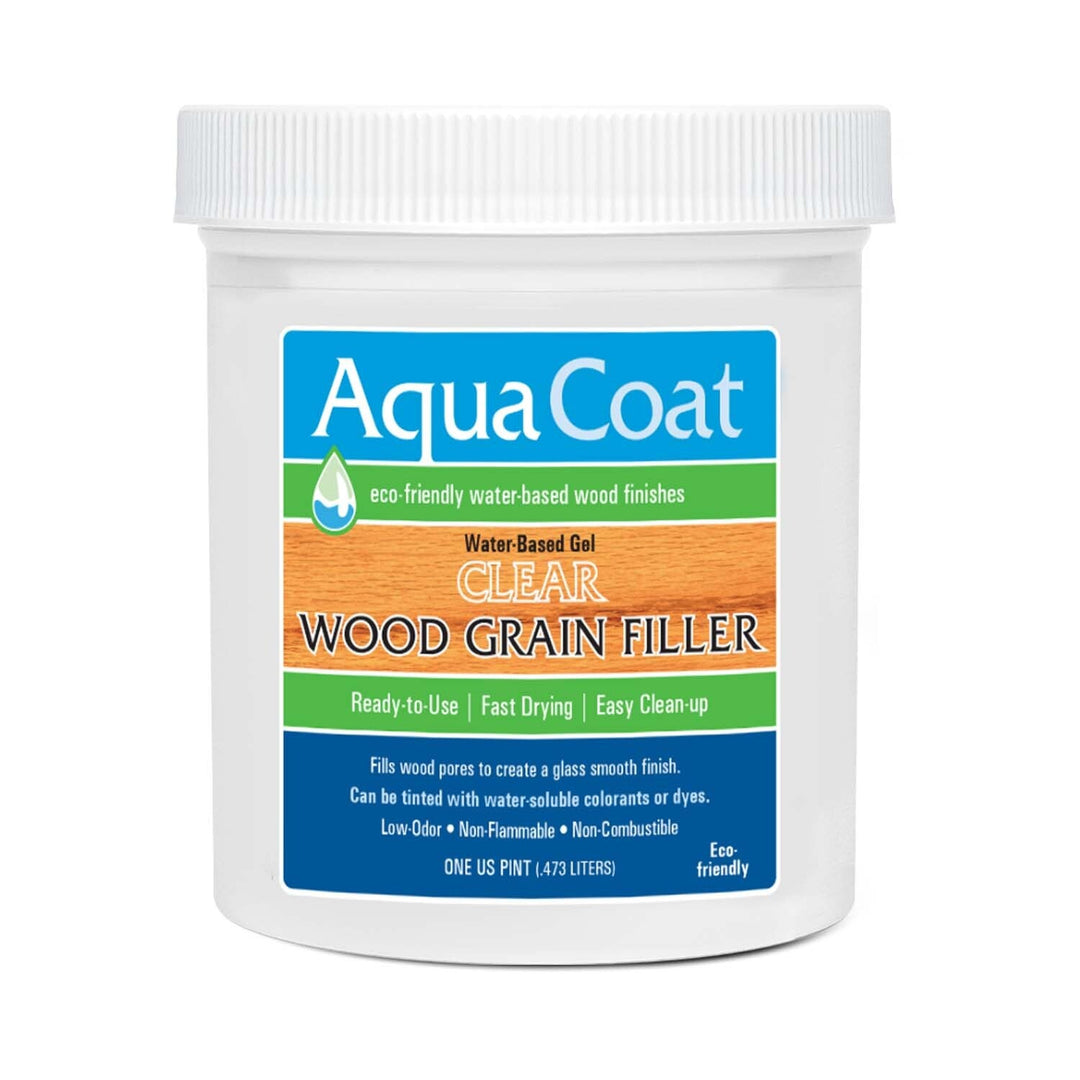
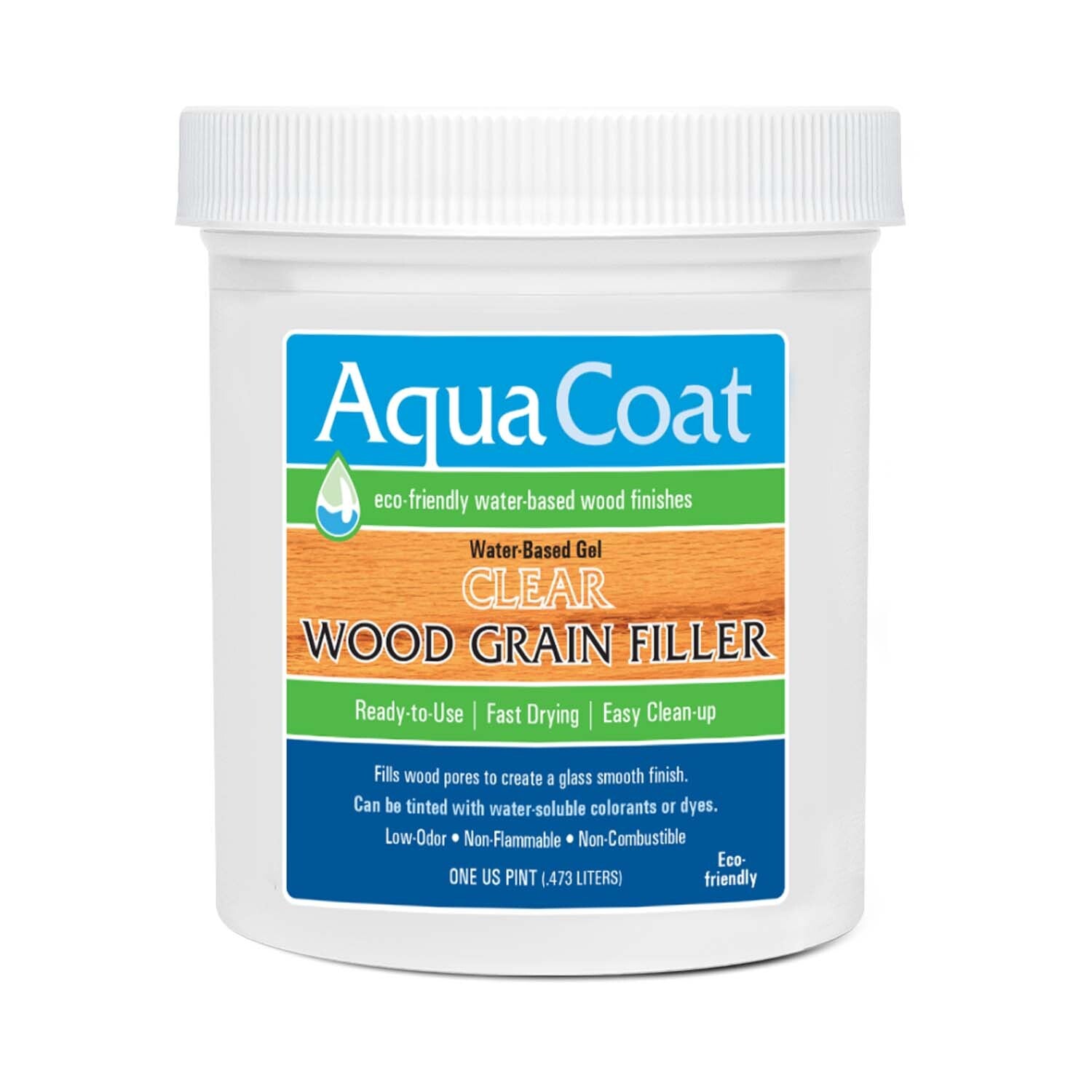
Fill open grain wood with Aqua Coat grain filler. Using the filler before you stain will inhibit the stains ability to penetrate into the wood grain. This would be desirable if you are trying to minimize the contrast of grain.
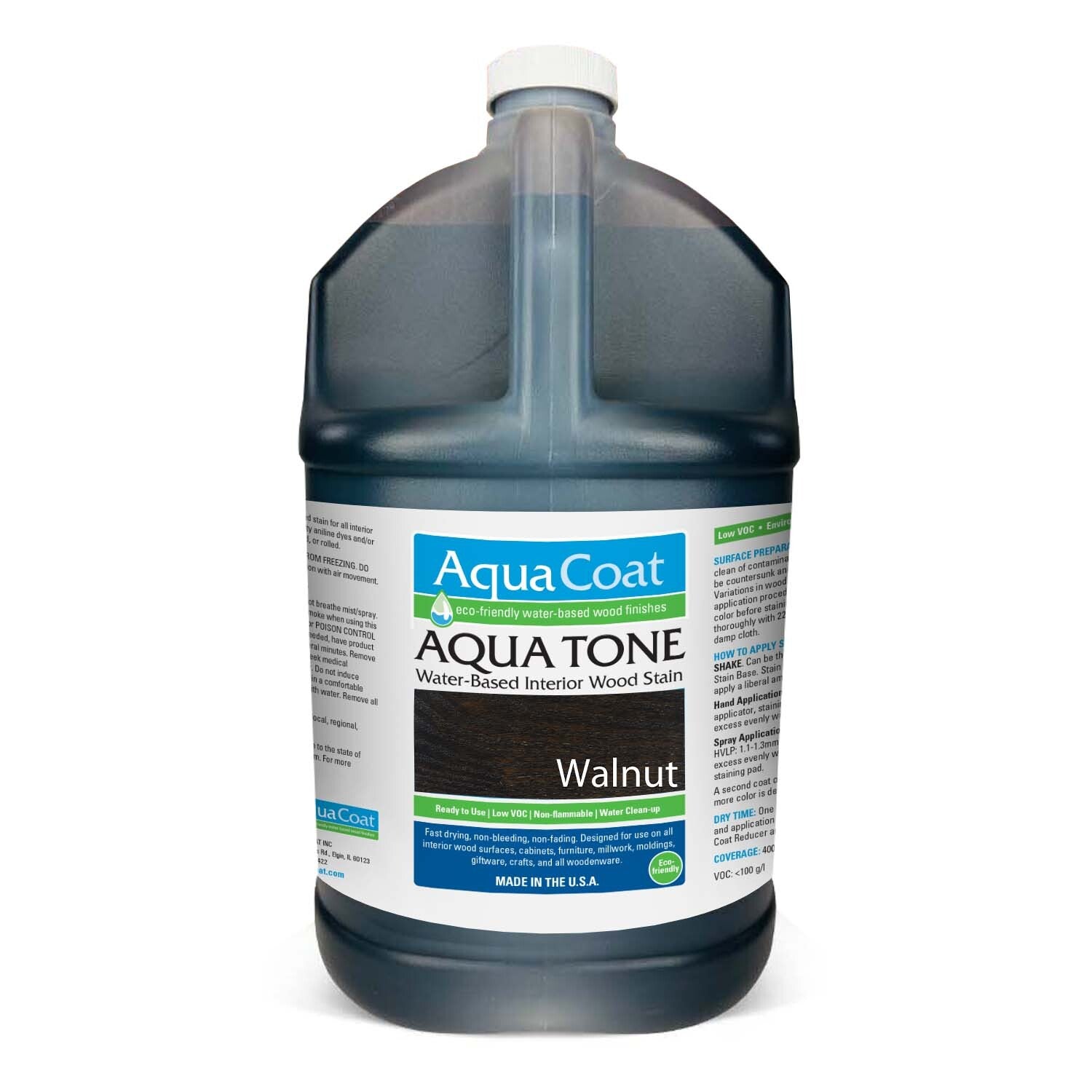
3: Apply Stain
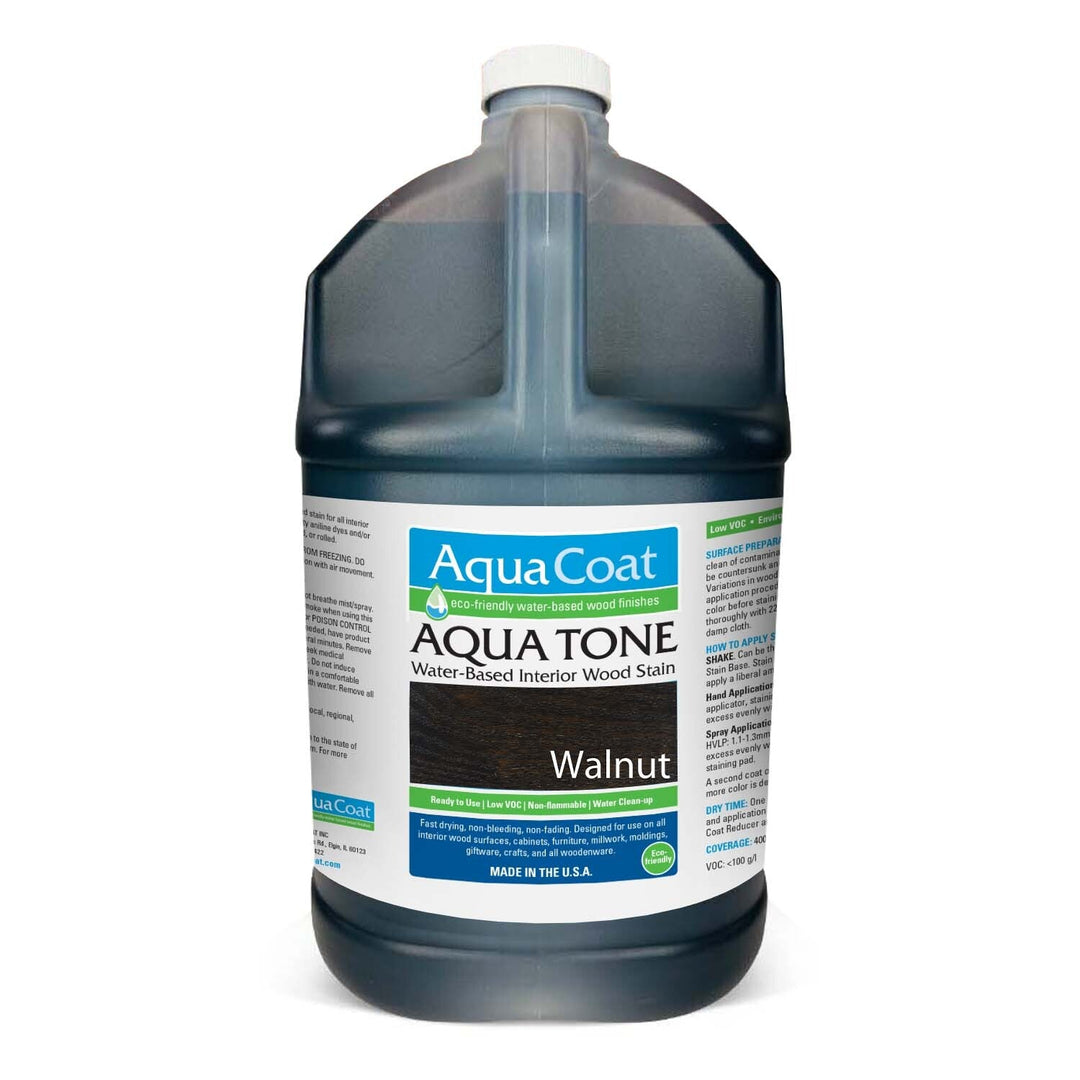
Brush, wipe, spray or dip… Wipe excess with a dry clean cloth or paper towel. Allow 30 to 60 minutes for dry time. Drying time can be reduced with gentle air movement, such as a window or box fan on low to medium speeds.
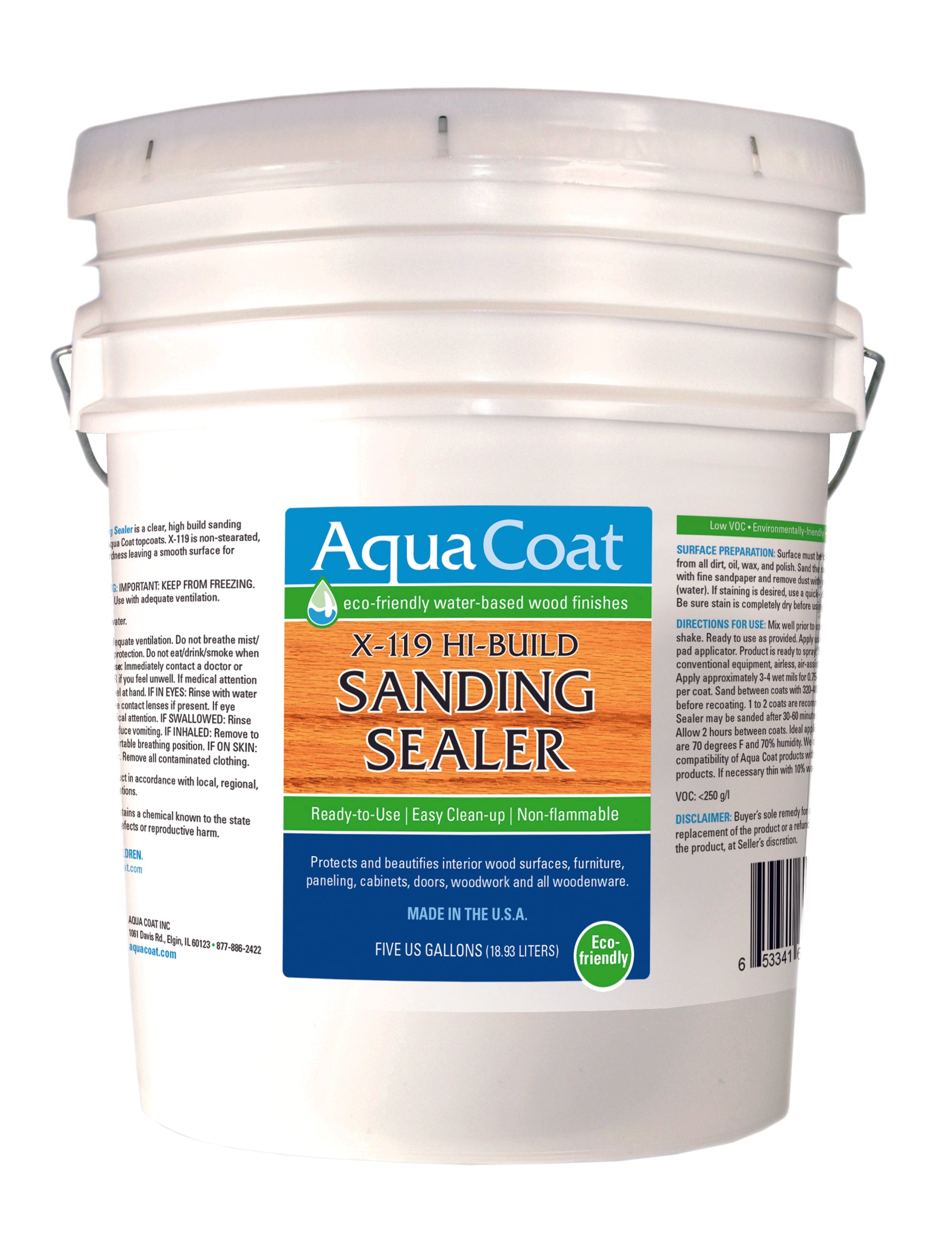
4: Apply Sanding Sealer
Spray or brush medium wet coat. Allow 30-60 minutes dry time. If your sand paper gums up, allow additional dry time, or use a fan as suggested in step #3.
Scuff sand with 220-grit or finer sandpaper.
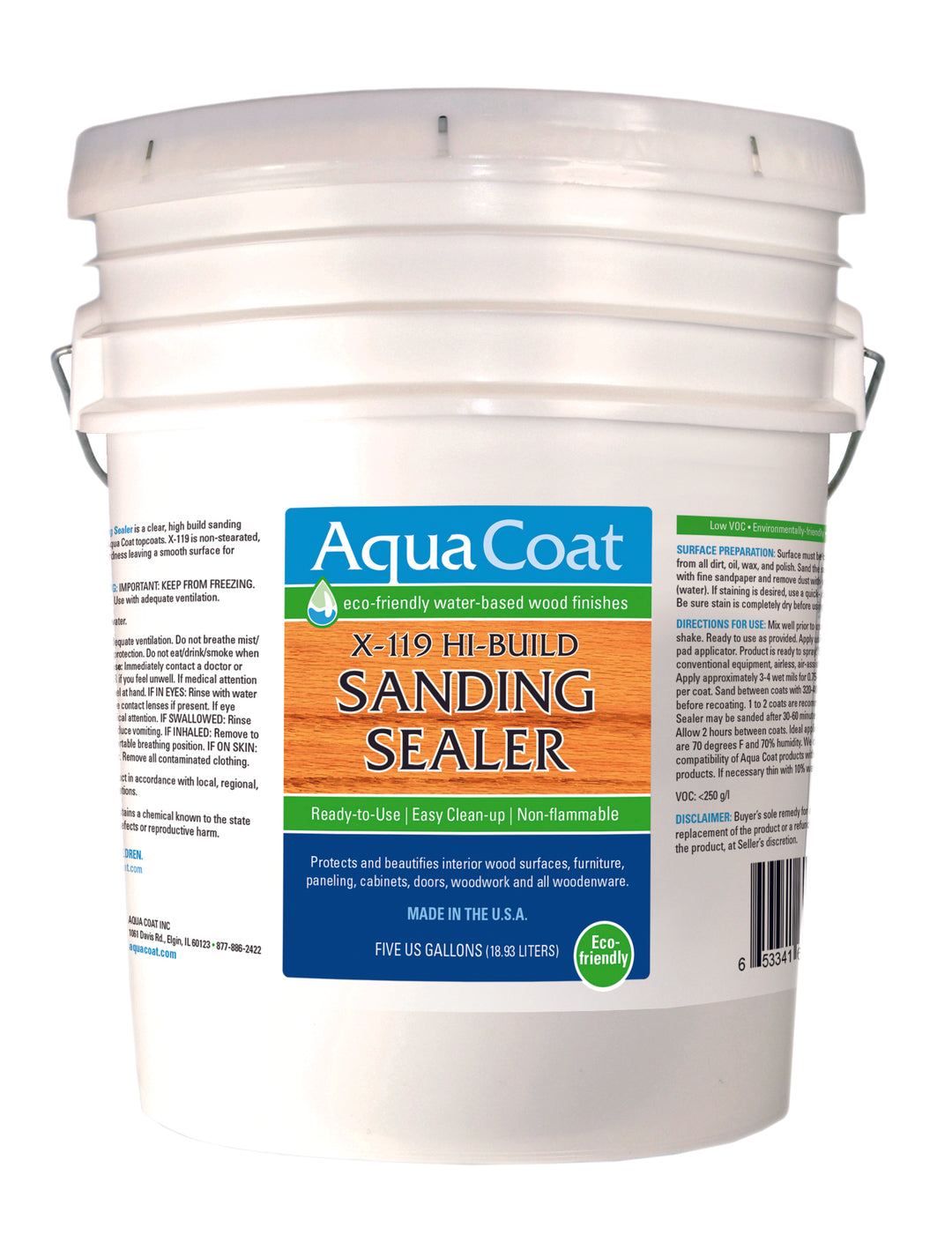
Clean off dust with water damp cloth. We offer two uniquely different SANDING Sealers. “Aqua Seal” is an “Amber Toned” penetrating product that performs much like an “Organic Shellac” the “X-119” sealer is a high solids , Hi-build sealer that acts much like a topcoat, but is formulated for easy sanding. We suggest a maximum of 2 coats, with either sealer (Note: for hard or tight grained woods, such as Maple, Birch, Cherry and Plywood versions of these species, we recommend the “X-119” sealer, as you will get better inter-coat adhesion. If you are going to brush your Sealer coats, adding 10 to 30% of the Aqua Coat “Retarder” will give you additional open or drying time, so that the brush strokes will flow out. We suggest 2 full coats of the sanding sealer, without sanding between coats. By sanding only after the 2nd coat of sealer, you will have applied a thicker film coat to sand and will eliminate any grain raising between coats and reduce your chance of sanding through the stain.
5: Optional
Clear grain filler- if a closed grain look is desired you may elect to use our “Clear Grain Filler” in the container it has the appearance of “white school paste” or “Crisco” shortening. It can be applied in several ways, such as: a small rubber squeegee, and old credit card, or a grey or white buffing pad. Another popular method is to apply it much as a paste wax with a circular motion, working it into the grain, applying 1 or 2 coats as needed. The filler stick to raw wood or any type of finish and can be applied between coats instead of all at once. It dries completely clear but any excess should be removed before it dries. Any residue remaining should be sanded off with the sealer.
6: Apply Clear Finish
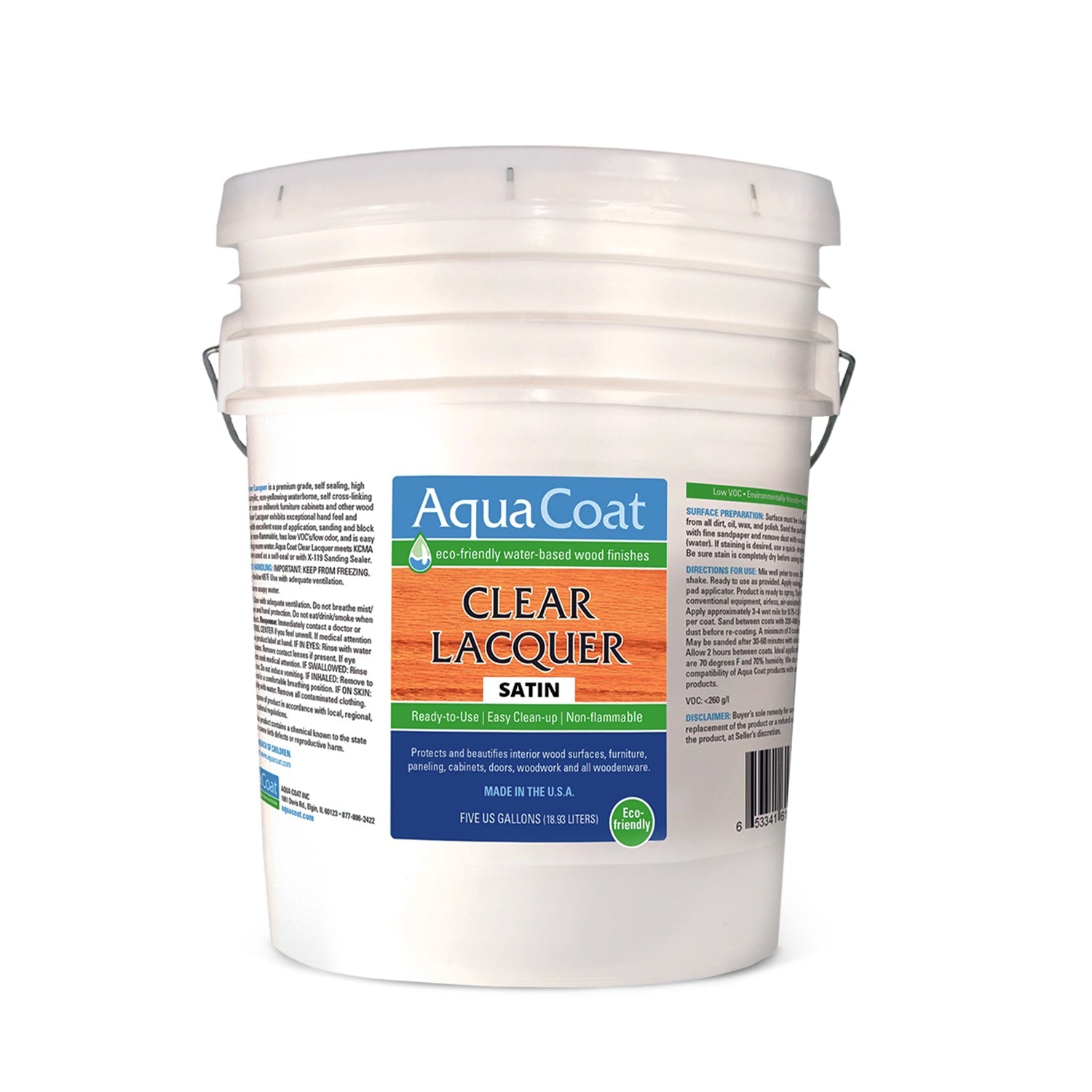
Spray or brush a medium coat. Plus or Minus 1Mil is a good starting point. Please experiment with a sample board to get the desired results before starting your final project. With HVLP Spray Technology, 3 or 4 light to medium coats may give you the best results. For standard air compressor or air-assisted airless, etc. use a 1 to 2 Mil. Thickness, per application, with a total of 2 to 3 coats might be best. You may use as many coats of the topcoats as you deem necessary, to achieve your desired results. The addition of Aqua Coat “reducer” will slightly lower viscosity of your topcoats, and reduces the chance of defects in appearance of your finish such as “Orange Peel” which is caused by insufficient atomization. Use 10 to 30% maximum. Allow 30-60 minutes dry time. Again you may add gentle air movement to alter dry times. For the ultimate, smooth final coat, allow the final coat to naturally air dry. The addition of 10 to 30% retarder in your final coat of finish will slow down the dry time and allow the film to more completely draw down for a nice smooth look and feel… if you sand between your topcoats. Use a 320 or finer grit sand paper, or a grey or white Scotch Bright (Steel wool substitute) Never use regular steel snag and adhere to the wood. The oil may cause poor inter-coat adhesion or a milky appearance and the steel wool fiber will show up as rust or black spots in your finish coats. IMPORTANT! Make sure your topcoats are completely dry before you apply the next coat of finish. Usually 3 coats per day maximum is a good rule of thumb. If sanding between coats use a 320 grit or finer sandpaper. If the sandpaper does not gum up, this is good indication that the film coat is dry. You may use the steel wool substitutes, such as 3M’s Scotch Brite Pads. Use the grey (very fine) or white (extra fine) never use regular steel wool with Water-Based finishes as they are treated with oil to keep them from rusting. Any residue from this oil may cause Water-Based finishes to appear milky or cloudy. If any steel fibers were to remain they would show up as rust or black pots in your finish. If you wish to brush your topcoats, we have a product specifically designed for this purpose. The product is called Brushable Urethane Varnish. It should be applied with a high quality synthetic bristle brush or a fine napped paint pad. For smaller surface areas the “paint pads” work quite well with our regular topcoats.
If you choose, you may buff or wax your final finish. Make sure your topcoats are completely dry before you aggressively buff or apply any wax. Make sure that the selected waxes are free of any solvents that might soften the fresh finish. Think of the water-based coatings more like the clear coats on your car or truck than as the standard furniture lacquers that you might be used to. Again we suggest experimenting with a sample board finished like your final project, to develop a polishing method that works for you.
Some people have achieved excellent results using the new Micro Abrasives that are use in the automotive industries. They sandpapers used for the polishing of water-based coatings are in the 2000 to 6000 grit range. The European versions of these are sold in Micron” ratings and will be as fine as 12,000 microns (grit) these are available from most auto body supply shops, on line woodworking supply stores and at most wood working shows.